

Two purchase paths
Ready-made products and custom-made garments had to sit side by side without being mistaken for each other.
Case study · Shopify · Apparel
Foberry is a Pakistani menswear brand selling shirts, trousers and jackets. We built a Shopify storefront that runs two purchase paths side by side: ready-made products, and a design-your-own shirt catalogue where the customer picks the fabric and the garment is stitched to their measurements.
Live storefront · scrolling top to bottom
01 / PROJECT DETAILS
Foberry sells made-to-measure and ready-made menswear across Pakistan.
foberry.pk (opens in a new tab)What we delivered
02 / THE PROBLEM
A made-to-measure brand sells two different things. Some customers want a finished shirt in a standard size today. Others want to choose a fabric and have it cut to their own measurements. The store had to serve both without confusing either, and it had to solve the hard part of selling tailoring online: getting measurements right with no fitting room.
Ready-made products and custom-made garments had to sit side by side without being mistaken for each other.
A custom order starts from the cloth, so the catalogue had to be browsable by fabric.
Shirts, trousers and jackets are each measured differently.
Companies ordering for a team need a different route from a single shopper.
03 / THE SOLUTION
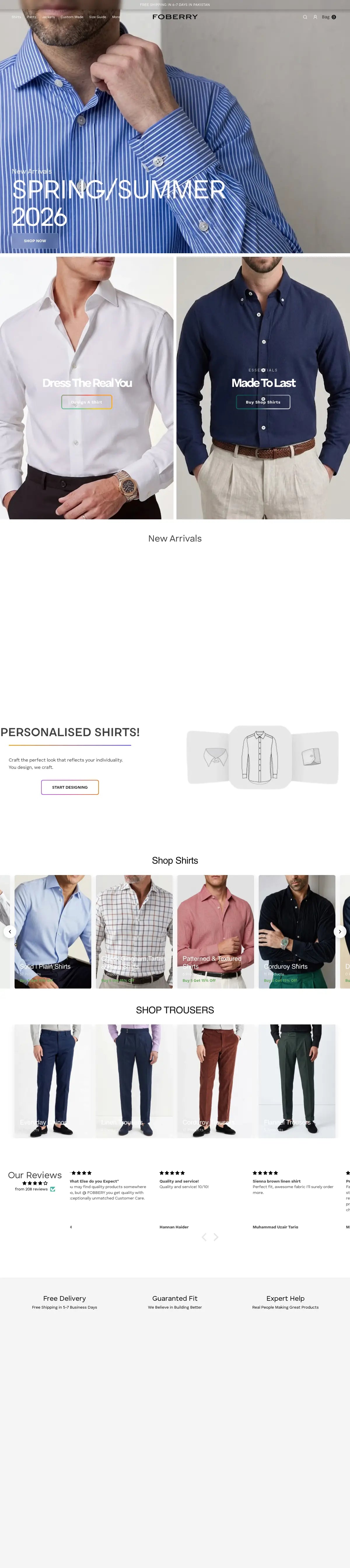
We built the storefront around two clear paths. The ready-made range is organised by garment, fabric and style. Beside it sits a design-your-own shirt catalogue of more than 130 fabrics, where the customer chooses the cloth first. Three size guides, a home-visit booking flow and WhatsApp support take care of fit.
A dedicated catalogue of 130+ fabrics, each stitched to the customer's measurements.
Separate guides for shirts, trousers and jackets, because each is measured its own way.
Customers who would rather be measured in person can book an appointment.
Tiered discounts for buying several shirts, and a service page for company orders.
Desktop and mobile · the same build
04 / STRATEGY
Four decisions shaped the build.
01
Ready-made and custom-made each get their own entry in the menu, so nobody orders the wrong thing.
02
Fabric is the first choice in a custom order, so the catalogue is built around it.
03
A size guide for the confident, a home visit for everyone else.
04
WhatsApp chat and order tracking keep the customer informed while a garment is being made.
05 / SCREENS
The whole homepage on desktop and on a phone, scrolling top to bottom side by side. Hover to hold it still.

06 / RESULTS
130+
Custom shirt fabrics
in the design-a-shirt catalogue
3
Size guides
shirts, trousers and jackets
2
Purchase paths
ready-made and made-to-measure
200+
Verified reviews
shown on the storefront
07 / PROCESS
The same four stages as every engagement, with the specific work done for Foberry at each one. The steps play through in order.
Stage 1
We review the current theme, apps and analytics, then write a fixed-scope SOW with named deliverables and a date.
What we did for Foberry
Stage 2
Work happens in a dev store on a Git-backed workflow. You get a preview link from week one, not a reveal at the end.
What we did for Foberry
Stage 3
Cross-browser and device QA, redirect map, analytics verification, then a launch window agreed with you rather than dropped on you.
What we did for Foberry
Stage 4
Fourteen to sixty days of included post-launch support while real traffic finds the edge cases.
What we did for Foberry
08 / THE STOREFRONT
The full Foberry homepage as shoppers see it. Scroll inside the frame to move through it from the offer strip to the footer.
09 / MORE WORK
 Shopify · Fashion
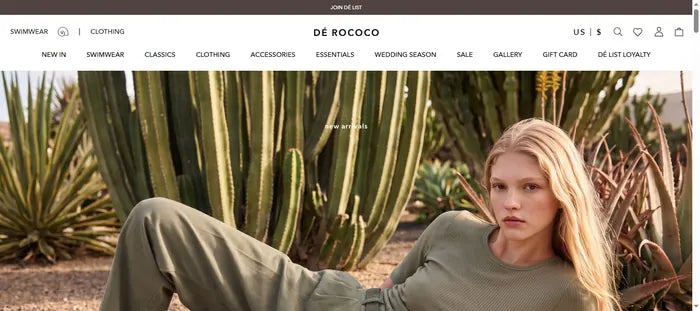
Dé Rococo: a weekly-drop fashion label, selling worldwide on Shopify
Markets served~150Shipping days2–5New dropsWeekly
Read the case study
Shopify · Fashion
Dé Rococo: a weekly-drop fashion label, selling worldwide on Shopify
Markets served~150Shipping days2–5New dropsWeekly
Read the case study
 Shopify app · AI
Support Hero: an AI helpdesk built for Shopify
Languages6Core screens3App Store launch2026
Read the case study
Shopify app · AI
Support Hero: an AI helpdesk built for Shopify
Languages6Core screens3App Store launch2026
Read the case study
 Shopify Plus · Health
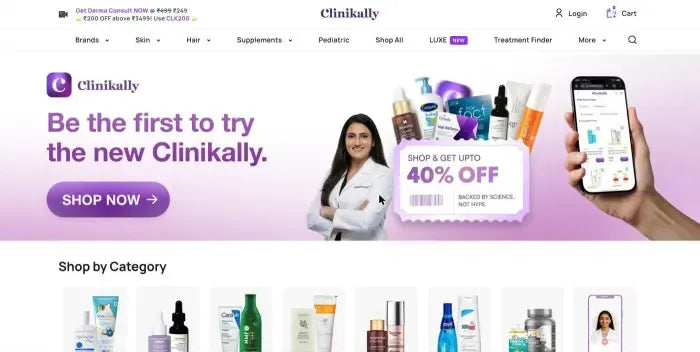
Clinikally: Built India's #1 teledermatology brand on Plus
SKUs live10K+Checkout+41%Repeat orders2.3×
Read the case study
Shopify Plus · Health
Clinikally: Built India's #1 teledermatology brand on Plus
SKUs live10K+Checkout+41%Repeat orders2.3×
Read the case study