


01
Shopify Admin API
GraphQL and REST integrations for products, orders, customers, inventory, metafields and bulk operations — with rate-limit-aware design.
API Development · Shopify Native
Custom Shopify apps, Admin & Storefront API integrations, webhooks, GraphQL services and middleware built for reliability, observability and clean ownership. We design APIs that power headless storefronts, internal tools, partner portals and agentic commerce — without the fragility of one-off scripts.
48-hour audit
Send your store URL and current API landscape. We reply with a recorded walkthrough: brittle endpoints, missing error handling, rate-limit risks, security gaps and five high-impact API actions ranked by reliability and product impact. No pitch, no obligation.
Your details stay with us. We never share or sell them.
01 / CAPABILITIES
From Admin and Storefront APIs to custom apps, webhooks, GraphQL services and observability. We build APIs that product and ops teams can rely on.
01
GraphQL and REST integrations for products, orders, customers, inventory, metafields and bulk operations — with rate-limit-aware design.
02
Cart, checkout, product and customer APIs for Hydrogen, Next.js and custom storefronts with caching and edge-friendly patterns.
03
Embedded admin apps, public App Store apps, theme app extensions and Shopify Functions using Remix, Polaris and modern app architecture.
04
Reliable webhook receivers, idempotent handlers, ordering, retries and dead-letter queues so events are never lost or double-processed.
05
Internal and partner-facing GraphQL APIs with clear schemas, auth, pagination and performance budgets for product and ops teams.
06
Discount, shipping, payment and cart transform Functions that run at the edge of checkout with typed inputs and deterministic logic.
07
Backend-for-frontend services that aggregate Shopify and third-party APIs, enforce auth and keep storefronts thin and fast.
08
OAuth, session tokens, least-privilege scopes, signed webhooks, secrets management and secure multi-tenant patterns.
09
Long-running product, order and customer syncs using Shopify bulk operations, queues and progress tracking without blocking the UI.
10
Documented, versioned APIs for partners, marketplaces and internal tools with clear SLAs and change management.
11
Structured data models exposed via Admin and Storefront APIs so custom product, content and config data stays queryable and typed.
12
Catalog, inventory and order endpoints structured for ChatGPT, Google AI Mode, Copilot and other agents with clear schemas and auth.
13
Move off legacy REST, undocumented scripts or brittle middleware onto versioned GraphQL or REST services without downtime.
14
Contract tests, OpenAPI/GraphQL schemas, staging environments and CI checks so API changes don’t break consumers.
15
Edge caching, query cost control, bulk vs real-time trade-offs and p95 latency targets that hold under real traffic.
16
Metrics, logs, traces, error budgets and alerting so APIs stay healthy and ownership is clear when they are not.
02 / PROCESS
Every engagement follows the same four stages. You always know what is happening next and how success is measured at each milestone.
Stage 1
We map consumers, data domains, volume and failure modes, then lock API contracts, auth model and SLOs before implementation starts.
Stage 2
Schemas, versioning, rate limits, error model, observability and deployment strategy are defined so the API is operable from day one.
Stage 3
Implementation with contract tests, staging validation, gradual rollout and rollback plans. Documentation and ownership maps ship with the code.
Stage 4
SLOs, alerts and dashboards stay live. We refine based on real usage and offer retainers for ongoing ownership and evolution.
03 / OUR WORK
Live stores, apps and platforms we have built and run. Case studies open on this site; other projects open the live build in a new tab.
120+
API projects shipped
custom apps, Admin/Storefront integrations and middleware
99.9%
Uptime target
with monitoring, retries and clear ownership of failures
<200ms
Typical p95 latency
for critical read paths under production traffic
100%
Documented handovers
schemas, credentials, runbooks and ownership on every project
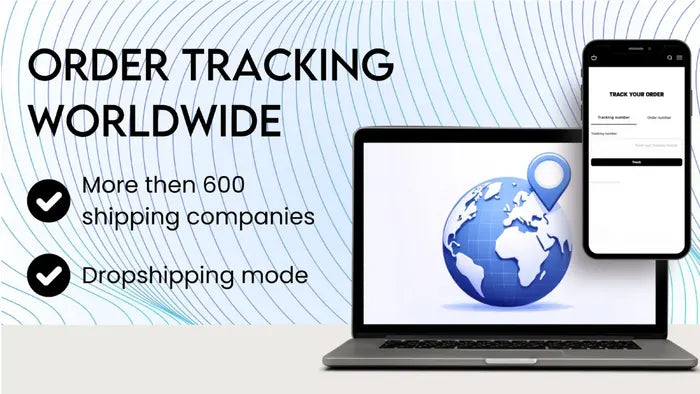
Shopify app · Integration · Automation
A public Shopify app that owns the post-purchase window. It syncs orders in real time across 600+ carriers and renders...
App Store listing: AutoTrack: Branded Order Tracking App for Shopify
Shopify app · Integration · Automation
ZA Dropshipping is a supplier-side Shopify app built for a South African fulfilment operator serving local merchants. South African dropshippers...
App Store listing: ZA Dropshipping (ZAD): South African Supplier Integration App for Shopify
Case study · Shopify Plus · Health
Prescription-aware checkout, doctor-consultation flow and a 10K+ SKU catalog tuned for sub-2s mobile loads.

Shopify app · Integration · Social
A free connector app linking a Shopify store to an external Cleard account. The merchant verifies a Cleard API key,...
App Store listing: Clear'd: Shopify Connector for the Cleard Social Commerce Platform04 / PRICING
Fixed-scope API projects, ongoing retainers, or full-time dedicated teams. Whatever the engagement, you’ll see the price before you sign: no hourly creep, no surprise change orders.
Project
$8K – $55K
Fixed timeline · Milestone-billed
Best for: Custom apps, Admin/Storefront integrations, webhook systems, GraphQL services
Retainer
$2.5K – $11K / mo
20–50 hrs/month · Month-to-month
Best for: Ongoing ownership, new endpoints, performance work and incident response
Dedicated team
$7K – $20K / mo
1–3 specialists · Embedded with your engineering team
Best for: Complex multi-API programmes, continuous platform work, high volume
05 / WHY BRANDS STAY
Most of our API work is repeat business or referral. These are the reasons clients give when we ask why.
Contracts, auth, rate limits, retries and observability are designed up front — not bolted on after the first outage.
We work daily with Admin API, Storefront API, Functions, webhooks and app architecture — not generic REST tutorials.
One accountable owner, clear weekly updates, no account-manager telephone game.
OpenAPI/GraphQL schemas, ownership maps and runbooks so the next engineer can extend the API without archaeology.
Written scope and a fixed number before work starts. No surprise line items or hourly creep.
Full repository access, deployment docs and secrets ownership. We stay because the work is good, not because exit is hard.
06 / TECH STACK
Native Shopify APIs and app tooling first, modern TypeScript services and GraphQL when you need custom surfaces, and observability baked in from the first commit.
07 / FAQ
Honest answers, including the ones most agencies dodge.
Focused integrations and webhook systems often land in 4–8 weeks. Custom apps or multi-surface GraphQL platforms usually run 8–16 weeks. Timeline is fixed in the SOW before work starts.
Both. We build private custom apps for a single merchant and public App Store apps with listing, review and multi-tenant architecture when that is the goal.
We use GraphQL for Admin API and most new internal surfaces, REST when a consumer or legacy system requires it, and often a mix with a clear BFF or gateway in front.
Projects: $8K–$55K. Monthly retainers: $2.5K–$11K/mo. Dedicated team: $7K–$20K/mo. Every quote is fixed-fee and locked in the SOW.
Rate-limit-aware clients, bulk operations, queues, backoff and caching are designed in from the start. We set realistic SLOs and test under load before go-live.
Yes. Retainers include SLO ownership, alerts, priority fixes and new endpoints as product needs evolve. Most clients keep a retainer after the initial project.